Heat Pump Running Cost Calculator
Estimate annual heat-pump electricity use from delivered heat and seasonal COP, then compare it with gas heating.
Heat Pump Running Cost Calculator
A seasonal COP is more useful than a single laboratory COP because real efficiency changes with outdoor temperature, supply temperature, controls and defrost cycles.
Frequently asked questions
What COP should I use?
Use a seasonal performance value from a trusted design estimate or field data when available. A single rated COP may overstate real seasonal performance.
Why can backup heat change the result?
Electric resistance backup has a COP near 1, so frequent backup operation can raise annual electricity use significantly.
Estimates only. Actual energy use and costs vary by equipment, climate, tariffs, installation conditions and user behavior.
External video
Watch: practical renovation guide
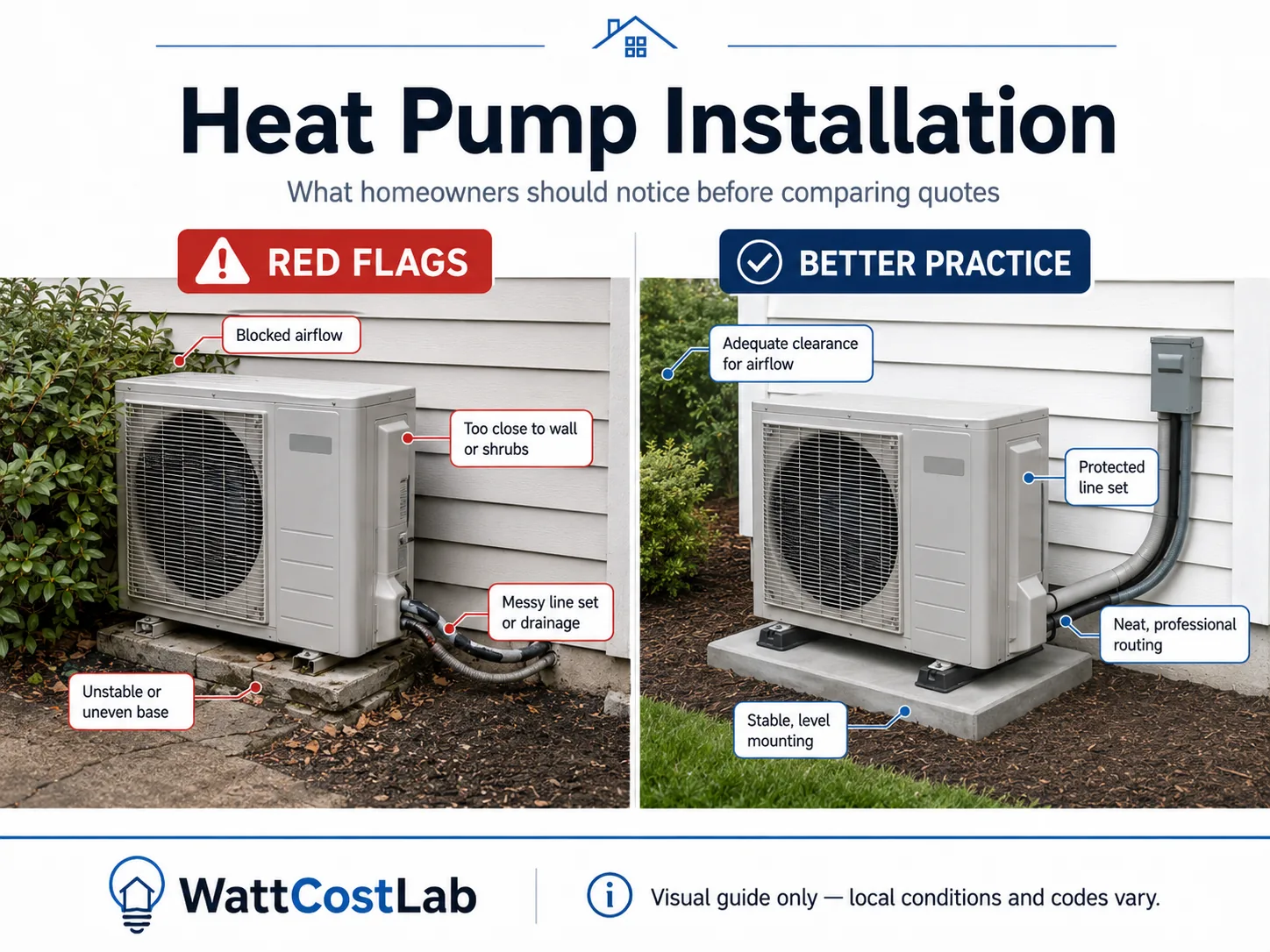
A short external video can help you understand the installation details behind the cost drivers on this page.
Heat-pump cost sensitivity: seasonal performance matters
Reviewed September 14, 2026. Annual electricity use is delivered heat divided by seasonal COP/SPF. A catalogue COP at one test condition should not be treated as year-round performance. Climate, supply temperature, defrost, controls and backup resistance heat can materially change the result.
Example. For 12,000 kWh of annual delivered heat, SPF 3 requires about 4,000 kWh; SPF 4 requires about 3,000 kWh—a 25% reduction in electricity for the same useful heat.
U.S. DOE Energy Saver: heat pumps → · Compare heat pump vs gas furnace →
Check the electricity-price assumption
Heat-pump operating cost depends strongly on both seasonal performance and electricity price. U.S. users can benchmark the tariff against Electricity Prices by State, based on EIA data.