Updated August 19, 2026 · WattCostLab Editorial Team
Home EV Charger Installation Cost
The charger itself is only part of the project. The distance from the electrical panel, circuit amperage, panel capacity, installation route and permitting often determine the final installed cost.
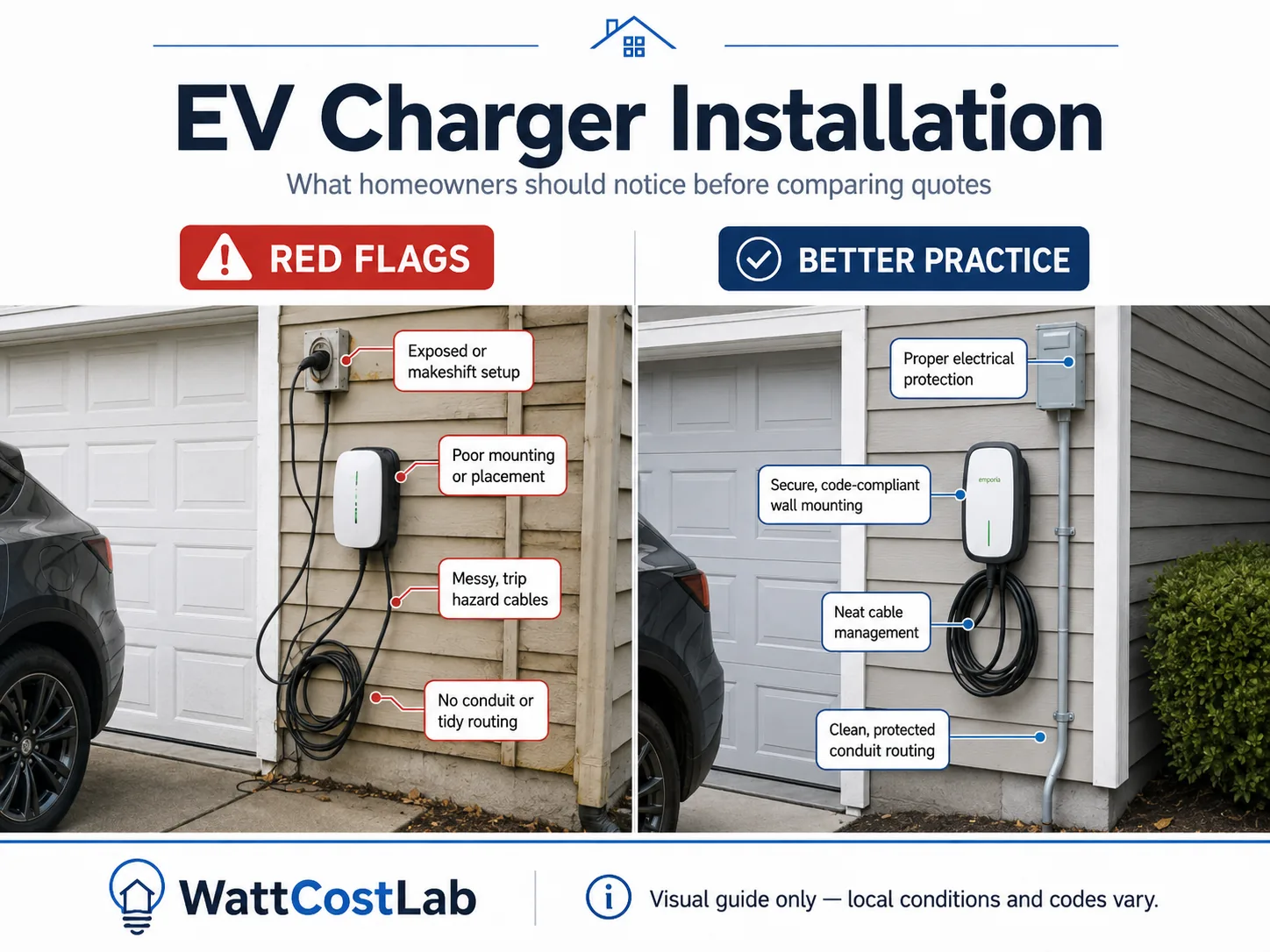
Main installation cost drivers
| Factor | Why it matters |
|---|---|
| Panel capacity | May determine whether additional electrical work is needed |
| Circuit length | More conductor and labor |
| Charging amperage | Affects conductor and circuit requirements |
| Installation route | Finished walls, attic runs or trenching can increase labor |
| Indoor vs outdoor | Equipment and weather exposure considerations differ |
| Permit and inspection | Requirements vary by jurisdiction |
Panel capacity before charger selection
Choosing the highest-power charger first can create unnecessary upgrade pressure. Start by considering driving needs, overnight charging time and available electrical capacity. A lower charging rate can still replenish substantial daily driving during an overnight parking window.
Hardwired vs plug-in
Both approaches can work when properly designed. Hardwired installations remove the plug-and-receptacle connection, while plug-in installations can offer easier equipment replacement. Local electrical requirements and charger specifications should determine the design.
How to compare electrician quotes
- Use the same charger power and installation location.
- Confirm circuit amperage and conductor type.
- Identify panel or service upgrades separately.
- Ask whether permits and inspection are included.
- Confirm wall repair or trench restoration scope.
Related tools
Use the EV Charging Cost Calculator, see Level 2 EV Charger Installation Cost, and review 200 Amp Panel Upgrade Cost.
FAQs
What is the biggest cost driver for a home EV charger installation?
The electrical work is often the largest variable: circuit length, wiring method, panel capacity, trenching, wall access and required upgrades can materially change the quote.
Do I need a 200 amp panel for an EV charger?
Not necessarily. A qualified electrician should evaluate the home's calculated load, charger power and available capacity. Load management can be an option in some installations.
Is hardwiring cheaper than installing a receptacle?
It depends on the equipment and project. Hardwiring can eliminate the receptacle and plug but still requires the same basic circuit-capacity and wiring considerations.
Have contractor quotes?
Compare price, warranty, included scope and exclusions side by side.
Before you request quotes
External video
Watch: practical renovation guide
A short external video can help you understand the installation details behind the cost drivers on this page.
Compare scope, assumptions and exclusions—not just the total price.
Use WattCostLab’s quote checklist before signing a contract. It helps you compare like-for-like project scope without claiming that a referral marketplace is active.
EV charging update — September 2026
Source check: September 13, 2026. DOE's Alternative Fuels Data Center continues to distinguish Level 1 home charging from faster Level 2 charging and recommends code-compliant installation by qualified professionals. Charging cost depends on vehicle efficiency, wall losses and the applicable utility tariff, including time-of-use pricing where offered.
DOE AFDC home-charging guidance → · EIA Electricity Monthly Update →
Use WattCostLab's EV Charging Cost Calculator to test charging losses, Level 1/Level 2 power and your own electricity rate.
EV charger quote checklist
Reviewed September 14, 2026. Ask whether the quote includes circuit length, breaker and conductor sizing, panel capacity assessment, load management if needed, trenching or surface work, permits, commissioning and charger hardware. Treat a generic national installed-cost figure as context, not as a substitute for a site-specific electrical quote.
DOE AFDC home charging → · Estimate charging operating cost →